

Special Session 4
CHALLENGES AND EMERGING APPROACHES TO LINEAR AND NONLINEAR DYNAMICS — THEORY, MODELING, COMPUTATION AND EXPERIMENTS FOR TIME-DEPENDENT PHENOMENA (SS4)
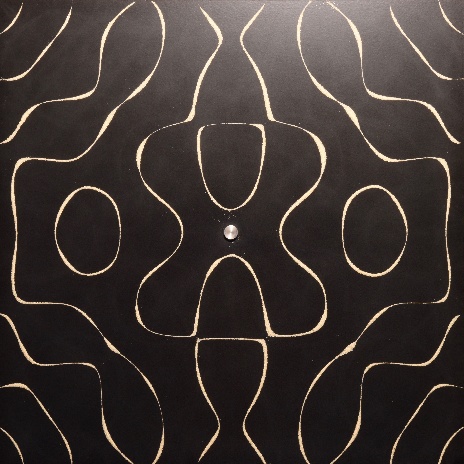

Dynamics provides a universal language for understanding, modeling, and predicting the temporal evolution of physical systems and phenomena. While traditionally associated with structures and machines, its fundamental concepts and methodologies extend far beyond classical engineering dynamics and naturally connect a broad spectrum of time-dependent processes across science and engineering. This session aims to provide a stimulating forum that brings together researchers working on linear and nonlinear dynamics while fostering the exchange of emerging ideas across disciplinary boundaries through their shared theoretical and methodological foundations.
We particularly encourage contributions that advance the theory, modeling, computation, and experimental investigation of time-dependent phenomena. The session welcomes innovative theoretical developments, novel modeling concepts, advanced computational methodologies, and experimental approaches that deepen our understanding of dynamic behavior and related transient processes.
ILLUSTRATIVE TOPICS INCLUDE, BUT ARE NOT LIMITED TO:
Foundations of Dynamics
- Linear and nonlinear dynamics
- Stability, vibrations, and wave propagation
- Time-dependent physical phenomena
Theory, Modeling and Computations
- Mathematical modeling and computational methods
- Numerical simulation and scientific computing
- Experimental techniques, system identification, and model validation
Application: structural vibrations, machine dynamics, mechatronic systems, coupled physics
- Fluid dynamics and fluid–structure interaction
- Heat transfer, diffusion, transport, and reaction phenomena
- Electromagnetics and coupled multi-physics systems
Emerging Directions & Trends
- Data-driven and machine-learning approaches
- Reduced-order modeling and digital twins
- Uncertainty quantification, optimization, and inverse problems
ORGANISER(S):
-
-
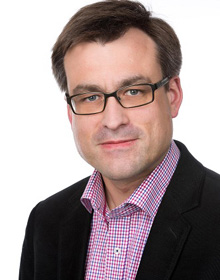 Prof. Hartmut Hetzler Chair of Engineering Dynamics,
University of Kassel,
Germany
hetzler@uni-kassel.de
PUBLICATION:
Info will be available soon!
INVITED SPEAKER(S):
Info will be available soon!